

Active Estate
Built for banks, loan servicers and institutional investors
The whole life of a portfolio, on one platform.
Active Estate carries institutional real estate from onboarding to disposal — valuation, REO, auction and sale as one governed process. It manages large, granular portfolios on a single live deployment, spread across several countries and hundreds of users.
One platform. Every stage.
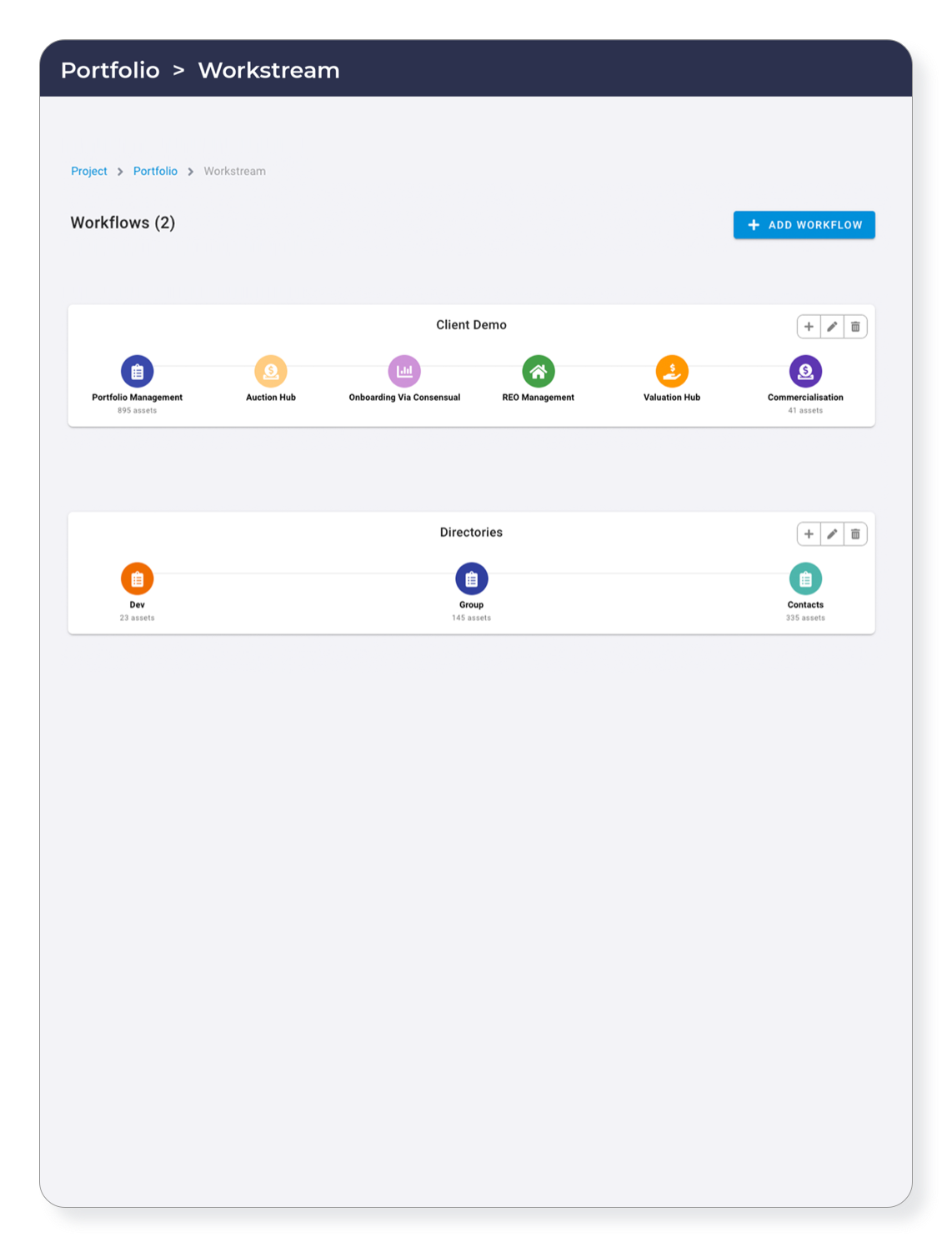
Inside Active Estate, a portfolio is a set of workstreams — ordered stages an asset moves through, each with its own screens, fields and rules. Six that run in production today:
- Onboardingassets arrive, validated and mappedimports checked line by line
- Portfolio managementthe living register of the bookmap, grid and bulk edits
- Valuationsassignment through to sign-offtwo-tier review, valuers inside
- REO managementowned stock, run to planstatuses and deadlines by rule
- Auction hubauction events in one placedates, documents and alerts
- Commercialisationlistings, offers, disposaloffers logged on the asset
None of this is fixed. Workstreams are defined in configuration — renamed, reordered or replaced to fit the mandate, with invoicing and bespoke stages added where a process needs them. An asset can sit in several workstreams at once, carrying different data in each, and moves between them by rule or by hand — with its full history intact.
See it in motion
Active Estate, up close.
A portfolio, seen from above.
This is how a book reads when every asset knows its stage. Hover a block — or tap one — to see the kind of status Active Estate keeps against each asset.

Illustrative view — a rendered district with example stage data, not a real portfolio.
Shaped by your team, without a line of code.
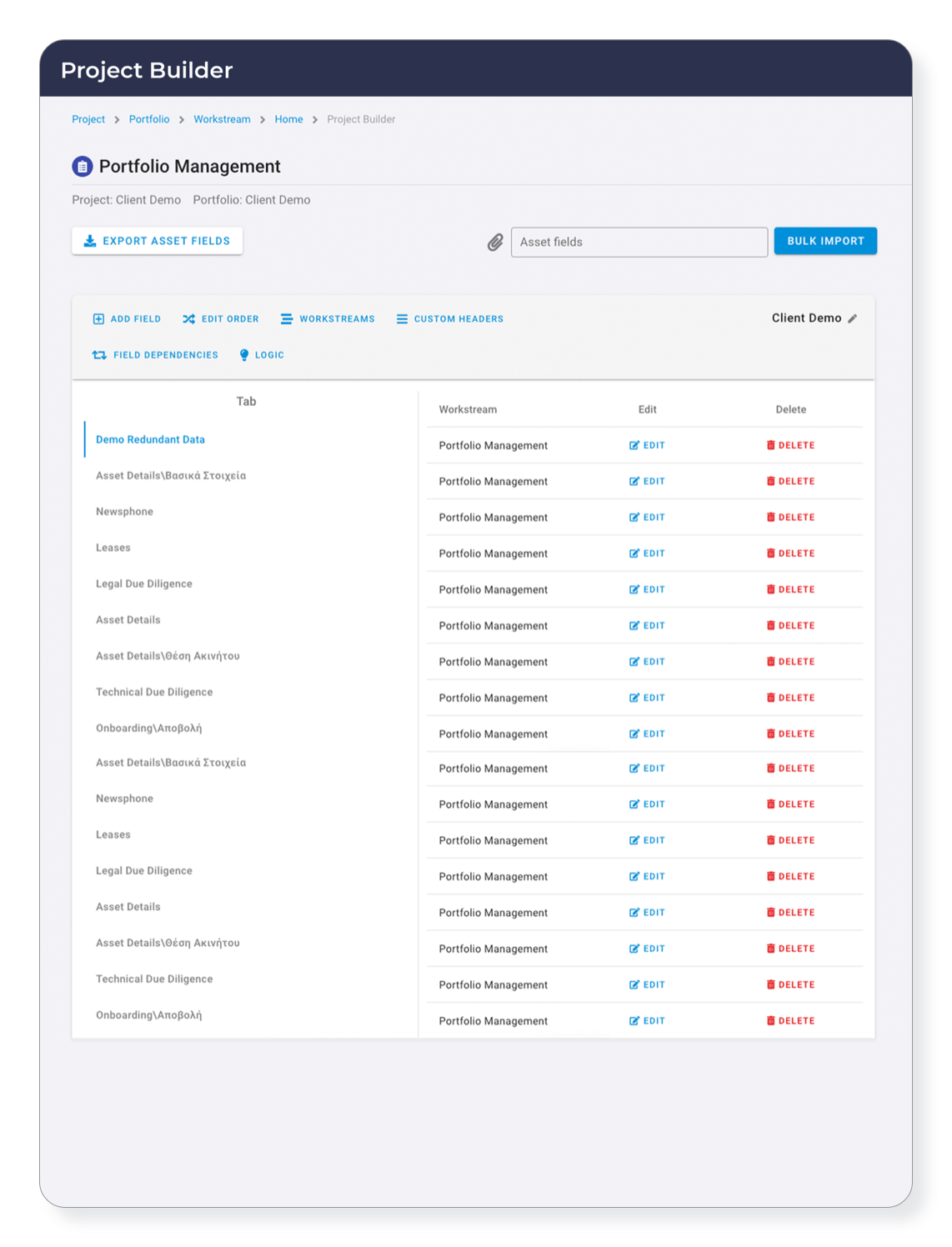
Every screen in Active Estate is configured, not programmed. In the Project Builder, your administrators define fields, tabs, statuses, alerts and reports in the browser — every label carried in English and Greek — and change them as the mandate changes, without waiting for development.
The daily work, done properly.
The workstream home page puts the whole book on a map and in a grid — and everything a team does from there leaves a record.
And Active Estate does not work alone: a documented API and scheduled file feeds keep it in step with the systems around it.
Oversight
Clear and compliant, by construction.
Where it comes from
Built because we needed it.
Active Estate did not start life as a product. It began inside Resolute Asset Management — the platform we built for ourselves, because the portfolios we managed had outgrown spreadsheets: tens of thousands of assets, several countries, processes that had to survive an audit.
It carried that workload for our own teams before we offered it to anyone else, and the deepest configurations running today are still the ones doing our group’s own work. When something slows a portfolio down, the chances are we met it first — and built the fix into the platform.
Proven in production
Trusted with the valuation books of institutions.
The deepest deployments of Active Estate run institutional valuation pipelines end to end — assignment, input, two-tier review, sign-off and invoicing, configured entirely in the platform. External valuers work inside it too, restricted to their own assignments, while a central contacts directory tracks each firm’s availability, workload and completion record.
Fees price themselves against rate cards. Report sections can be drafted by AI — in English and in Greek — for the valuer to review. And where a project enables them, automated value estimates sit alongside the human ones.
See it on a portfolio like yours.
See Active Estate live — the workflows, the rules and the reporting, on a configuration that looks like your own.
Request a demo